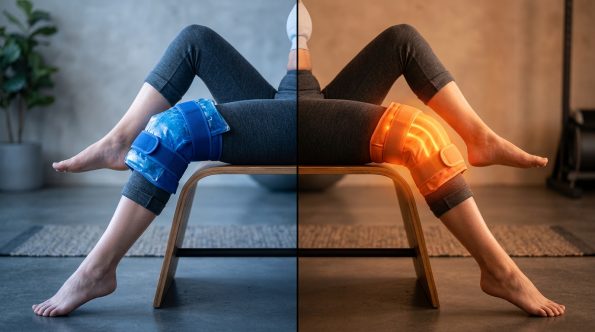
Short answer: use heat when the knee feels stiff, tight, and achy — heat relaxes
muscles and brings circulation to the area, which is exactly what a “cold, creaky” knee wants. Use ice
when a knee is freshly aggravated — swollen, hot to the touch, or painful after an overdoing-it day —
because cold calms inflammation and numbs the soreness. Chronic daily achiness usually belongs to heat;
acute flare-ups usually belong to ice. When in doubt with swelling, choose ice first and let a doctor
sort out anything that doesn’t settle.
What heat actually does
Warmth does three helpful things to a stiff knee. It widens blood vessels, so fresh blood flows in and
carries away the metabolic junk that accumulates in tissues you haven’t moved much. It makes collagen
tissue — tendons, ligaments, the joint capsule — more elastic, so movement feels smoother. And it dulls
pain signals by saturating the nerves with a steady, pleasant stimulus, the same reason a hot shower
makes everything feel more survivable. That’s why the first minutes after applying heat often bring that
“ahh” moment — the knee is being told, in every language it speaks, to relax.
Heat’s limitation is equally clear: it does nothing for fresh inflammation, and can make a hot, swollen
knee feel worse. Warmth on top of warmth is not a strategy.
What ice actually does
Cold narrows blood vessels, slows fluid creeping into already-irritated tissue, and reduces the nerve
signals that report pain. It’s the right tool when a knee is reacting to something — a longer
walk than usual, a stair-climbing session your knees remember at 2 a.m., or visible puffiness. Ice is
also the cheapest, most available tool in the kit: a bag of frozen peas wrapped in a towel remains a
perfectly legitimate medical device.
Ice’s limitation: used too often on chronic, stiff, “dry” knees, it can leave them feeling tighter and
colder without addressing anything. Cold manages flare-ups; it doesn’t build a daily routine.
The rules that keep both safe
| Rule | Heat | Ice |
|---|---|---|
| Session length | 15–20 minutes | 10–20 minutes |
| Barrier | Thin cloth if intense | Always — never skin on ice |
| Frequency | 1–2× daily, part of a ritual | Every few hours during a flare, first 48–72h |
| Never | On hot, swollen, or freshly injured knees | Falling asleep on it; on numb skin |
| Auto shut-off | Non-negotiable | N/A (set a phone timer) |
Some people swear by contrast — a few minutes of heat, then a short cold spell, repeating — for that
“can’t decide” day. It’s harmless if both sessions stay short and barriers stay on, but it’s optional
garnish, not core medicine.
Why chronic knee achiness usually wants heat
The classic 45+ knee complaint isn’t an injury — it’s stiffness and dull ache, worst in the morning or
after sitting, easing once you get moving. That pattern is circulation-and-tissue-talk, not inflammation,
which is why people who switch their morning hot shower for a morning plus targeted heat session
notice the difference. Warming the knee before a walk also feels noticeably better than walking cold.
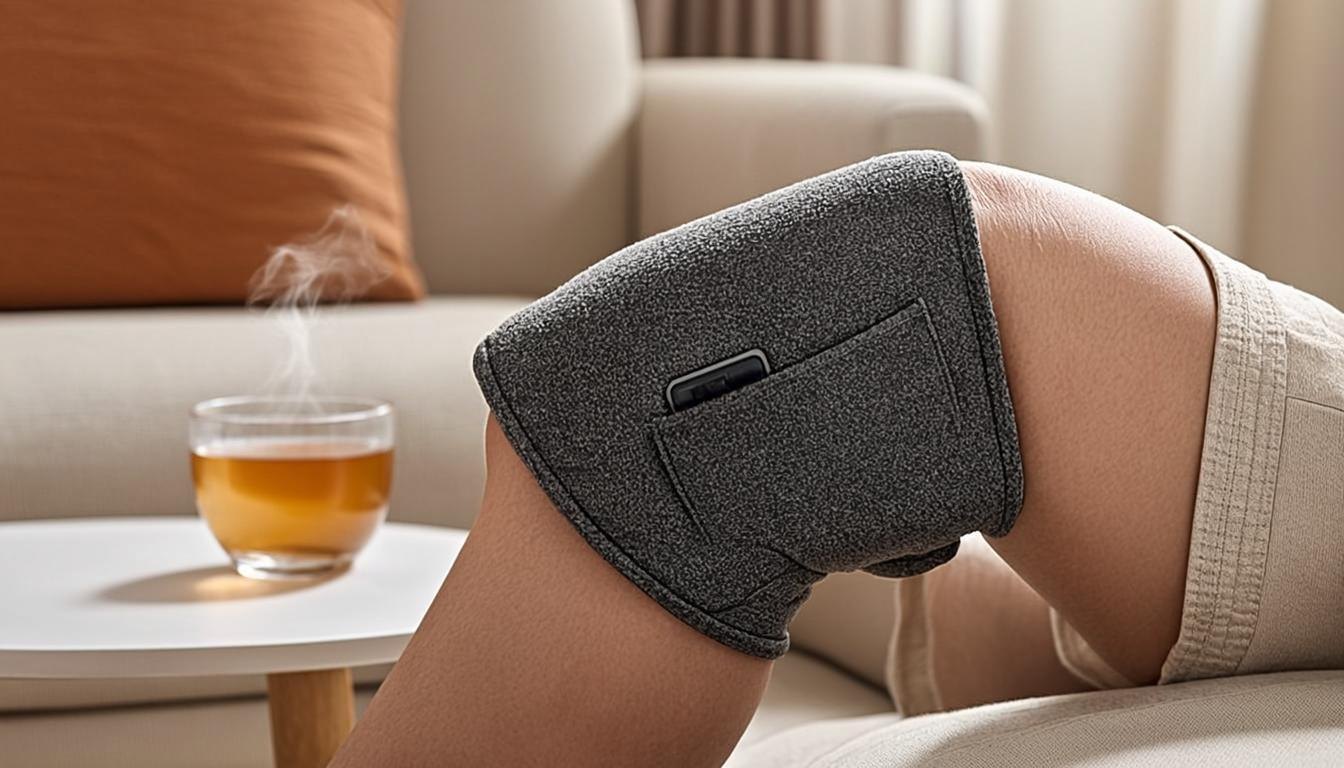
That’s the job description of a heated knee massager: dependable warmth on schedule, plus gentle
vibration to loosen the muscles around the joint. The
KneeEase Heated Knee Massager pairs far-infrared
heat with vibration modes and an auto shut-off, which means the “20 minutes then stop” rule enforces
itself. Fifteen minutes with the morning coffee becomes the ritual, and stiff mornings get noticeably
less dramatic.
When a knee deserves a doctor, not a device
Clear lines, no hedging: a knee that is hot and visibly swollen, a knee that buckles or locks, pain
that follows a specific injury, numbness or tingling below the knee, or stiffness that lasts more than
30–45 minutes every morning — those are medical conversations. Comfort tools support healthy, working
knees; they don’t diagnose, and they don’t replace the professional who can actually look inside.
The support crew: compression, elevation, and pacing
Heat and ice get all the attention, but the three quiet teammates decide how the knee feels by
evening. Compression — a light knee sleeve, not a tourniquet — keeps swelling from
collecting and gives the joint a gentle sense of support; if it leaves a deep ring on your skin, it’s
too tight. Elevation — legs up on an ottoman so the knee is above hip level for a
while — uses gravity to drain the day’s accumulation; ten minutes after a long day is genuinely useful,
two minutes is theater. Pacing is the least popular and most effective: splitting one
heroic weekend yard-work marathon into two moderate afternoons prevents the flare that made you reach
for ice in the first place.
None of these require purchases or appointments, which is precisely why they get skipped. But stack
them — pace the week, elevate the evenings, compress during long days — and the heat and ice sessions
become maintenance instead of rescue. That’s the difference between a knee you manage and a knee that
manages you.
Making the decision automatic
Decision fatigue is real, so remove it. Two questions cover most days. First: is the knee
reacting — hot, puffy, worse than usual after something specific? That’s ice territory, every
few hours, first two or three days. Second: is the knee grumbling — stiff, tight, cold, the
usual daily ache? That’s heat territory, on schedule, as part of a ritual. Both at once (a puffy knee
that also feels tight)? Ice first until the heat and puffiness settle, then switch to heat for the
stiffness phase.
Write it on a sticky note if it helps: hot and puffy = cold; stiff and cold = warm; unsure or
injured = doctor. The worst outcome isn’t picking the wrong one for a day — it’s the flare that
nobody managed, or the chronic stiffness nobody warmed up, because deciding felt like work.
Questions people ask
Can I use heat and ice the same day?
Yes — many people use heat in the morning for stiffness and ice in the evening after a heavier day.
Just give the skin time between sessions, and keep both under 20 minutes with barriers.
Which one for arthritis-ish, everyday achiness?
Heat is usually the better daily companion for chronic, non-swollen achiness — that’s exactly the
pattern warmth addresses. Ice is for flares, not for ritual.
Is a heating pad good enough?
A heating pad delivers heat, and heat is the active ingredient — but pads drape, slide, and don’t add
massage. A structured wrap stays put and adds vibration; that difference is why wraps win for daily use.
How do I know my flare is more than a flare?
Time and one-sidedness. A flare that fades in a few days is a flare. Swelling that stays, a knee
noticeably worse than the other one, or pain that changes how you walk — doctor. The good news is that
knowing this line is most of the safety battle.
Does the same heat-or-ice logic work for hands and shoulders?
Broadly, yes — chronic stiffness favors warmth, fresh aggravation favors cold, and anything hot,
swollen, or one-sided for more than a few days gets looked at. Joints are more alike than the marketing
admits; the sessions are just shorter for smaller joints.
Does heat help before or after activity?
Before — warm tissue moves better, so heat up, then move, then rest. Save any cooling for after, and
only if the knee complains.
Ready when you are: the KneeEase Heated Knee Massager ships in 3 business days, delivery lands in 5–10 days across the 48 contiguous states, and every order carries our 30-Day Quality Guarantee — if anything arrives defective, we replace or refund it, no runaround. Buying for both knees or two households? Two sets save $50, and shipping is free.
When NOT to Use Heat — Read This Box Twice
Heat is wonderful on the right knee at the right hour, and counterproductive on the wrong one. This is the box we wish every heat-product listing printed, so here it is in plain words:
- A freshly injured knee. The first 48 hours after a twist, fall, or impact belong to ice and rest. Heat on fresh swelling turns “puffy” into “angry.”
- A hot, red, visibly swollen knee. Heat feeds what is already hot. Cold pack, elevation, and a doctor call are the moves — not a warming wrap.
- Diagnosed circulation problems, diabetes with nerve issues, or blood-thinning medication. Sensation and blood flow behave differently in these cases; get the doctor’s green light before any heat device, even a gentle one.
- Skin that cannot feel temperature well. If numbness is part of the picture, you cannot trust your own “too hot” alarm — external timer supervision is mandatory.
The companion article on morning stiffness covers the flip side — knees that ache cold and improve with movement — where gentle heat usually earns its place.
The 20-Minute Comfort Rule
Two rules make heat both safer and more effective. First, sessions of about 15–20 minutes, not hours — long, low warmth beats short, scorching bursts, and your skin keeps its dignity. Second, a cloth barrier between wrap and skin always; direct-on-skin heat concentrates where the fabric touches and burns where you cannot see.
Build the session around something you already do: the last third of a TV episode, the newspaper, the evening tea. Attach heat to an existing ritual and it happens daily without willpower — the same trick that makes our evening knee ritual work. And hydrate; warmth that makes you sweat mildly still costs water.
Frequently Asked: Heat and Ice Safely
Can I alternate heat and ice on the same day?
Yes — many people do heat for stiffness in the morning and a short cold pack after a heavy walking day. Keep a buffer of roughly an hour between the two, and let the knee’s reaction decide: whichever session leaves the knee calmer an hour later is the one your knee is voting for.
Is heat good for stiff morning knees?
Usually yes, because morning stiffness in a knee that was fine yesterday is about cold, slow tissue — exactly what gentle warmth wakes up. A 10–15 minute warm wrap while you sit with your coffee, followed by easy movement, is the pattern our readers report works best. Persistent stiffness that lasts well beyond an hour most mornings belongs in a doctor conversation.
What about heat after long walks?
If the knee feels tired but not swollen, gentle heat afterward is a comfort ritual most people love. If the knee feels hot, puffy, or is visibly swollen, switch to the ice column of this article — that knee wants cold, elevation, and quiet, in that order.