
Short answer: a good knee massager comes down to four things that actually change how
it feels — real, penetrating warmth (not a hot plastic shell), vibration or compression with more than one
intensity, a wrap that stays put on your specific knee, and a controller your hands can manage while
relaxed. Everything else — colors, apps, marketing words — is decoration. Here is how to separate the
tools that earn their 15 minutes a day from the gadgets that end up in a drawer by February.
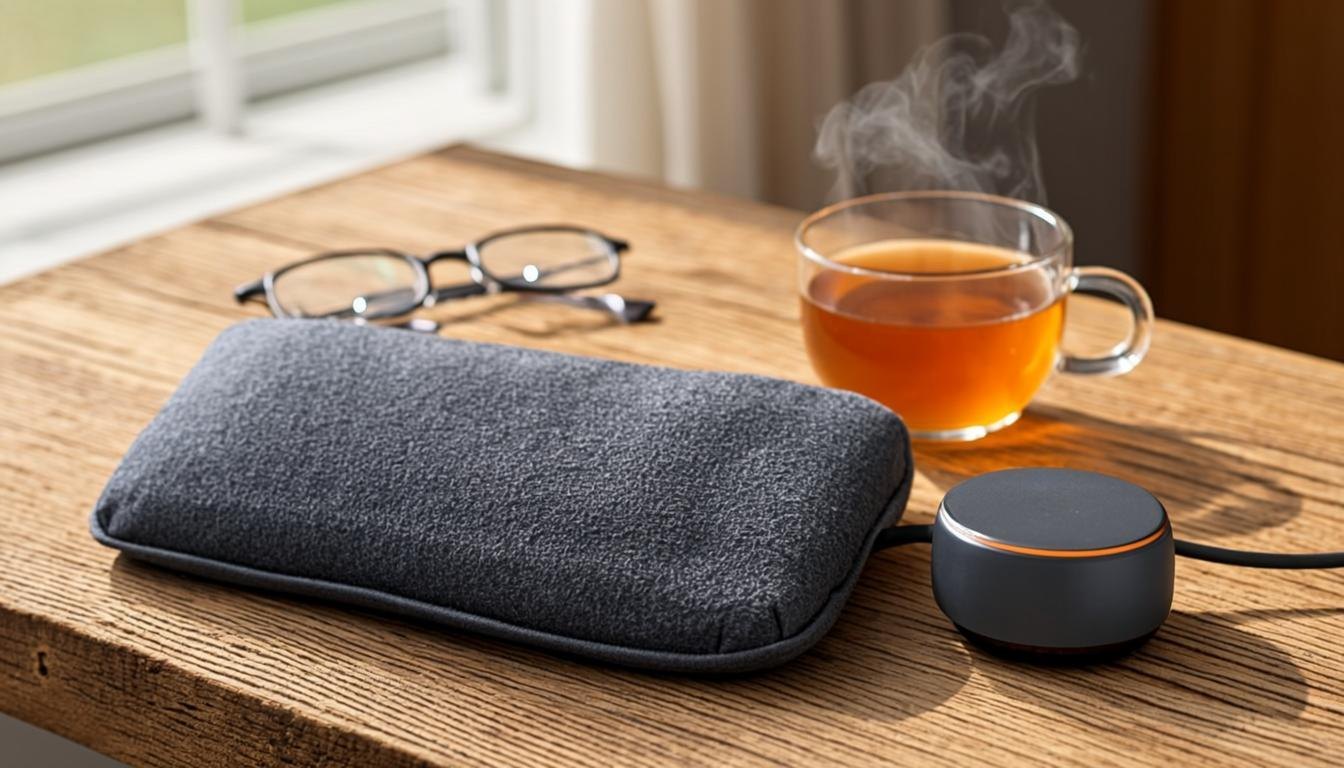
Start with the reason you’re buying
Be honest with yourself here, because it decides everything else. Is your main complaint stiffness
when you stand up — the first dozen steps that feel like your knees need oiling? That points you toward
heat-first devices. Is it a dull ache after long days on your feet, with muscles that
feel knotted? That favors vibration and massage. Is it puffiness and heaviness in both
the knee and the calf? That is a circulation story, and an air-compression leg wrap will serve you better
than a knee-only gadget. A device built around your actual problem feels like relief; a device built
around a generic problem feels like a toy.
It also matters who the user is. A 68-year-old buying for themselves needs big buttons and a cord they
can reach from a chair. A 45-year-old runner wants something they can strap on after a workout and forget
about. Nobody gets penalized for knowing exactly who it’s for — least of all the person receiving it as a
gift, which is when wrong guesses get expensive.
The four things that actually matter
1. Heat you can feel, not just a label
“Heated” covers a wide range. Better knee massagers warm through far-infrared heating elements that
push warmth into the joint area instead of just toasting the skin on top. You want a stated temperature
range, a warm-up time under a couple of minutes, and — critically — an auto shut-off.
Heat plus falling asleep plus a timer that never fires is how heating pads end up causing low-grade skin
irritation. Auto shut-off isn’t a feature; it’s a requirement.
2. More than one intensity
Single-speed massagers are a compromise you regret. On a sensitive day, even gentle vibration can feel
like too much; on a stiff day, the lowest setting does nothing. Look for at least three modes or speeds
and a sensible top end — you’re not trying to tenderize anything, you’re encouraging blood flow and
loosening the muscles that tug on the knee: the quads above, the hamstrings behind, the calves below.
3. A wrap that fits your knee
Measure once, buy once. Most wraps fit a range like 14″–21″ around the knee, but the difference between
“fits” and “fits well” is whether the straps hold position when you shift in your chair. If the massager
slides even half an inch, the heat and vibration stop lining up with the spot that hurts. Bigger velcro
overlap, two-strap designs, and a wrap that keeps the controller from dangling all matter more than any
spec sheet admits.
4. A controller a relaxed human can use
The whole point is to sit back. If changing the heat level requires leaning forward, squinting, or
pinching tiny buttons, you’ll stop using it. A handheld remote with tactile buttons beats a phone app —
apps require pairing, updates, and patience, three things nobody associates with comfort.
Quick comparison: which type fits which complaint
| Type | What it does best | Best for | Watch out for |
|---|---|---|---|
| Heated knee wrap (heat + vibration) | Warmth plus gentle loosening in one session | Stiffness, chronic achiness, cold-weather days | Check auto shut-off and strap quality |
| Vibration/percussion knee massager | Muscle relaxation around the joint | Post-activity soreness, muscle knots | Not a heat source; noise varies |
| Air compression leg massager | Sequential squeeze for circulation | Heavy, puffy legs; whole-lower-leg relief | Bulkier; knee is covered indirectly |
| Plain heating pad | Cheap warmth | Budget backup | No massage, slides off, drapes badly |
Red flags while you shop
Walk away from any seller who claims a massager treats, cures, or reverses arthritis —
that’s not how these devices work, and it’s a signal the rest of their claims deserve suspicion too.
Watch for missing basics: no stated temperature range, no mention of auto shut-off, no real return or
guarantee policy, and “one size fits all” on a product that visibly has straps sized for one body type.
A company that can’t explain who the device is not for hasn’t spent enough time with it.
Ask the boring questions too. Where does it ship from, and how long does delivery actually take? What
happens if the unit dies in week two? Vague answers before the sale become worse answers after it.
Who KneeEase is built for — and who should skip it
The KneeEase Heated Knee Massager was chosen for
our shelf because it covers the four points above: far-infrared heat with an auto shut-off timer, multiple
vibration modes, an adjustable two-strap wrap that stays where you put it, and a handheld controller with
buttons you can find without looking. It’s the daily-ritual tool — 15 minutes in the morning while the
coffee brews, or in the evening while the TV murmurs.
Honest limits: it is a comfort and relaxation device, not a medical treatment. If your knee is hot,
visibly swollen, injured, or painful in a way that changes how you walk, that’s a conversation for a
doctor first — massage and heat can wait; a proper diagnosis shouldn’t. And if your main complaint is
heaviness and puffiness through the whole leg rather than the knee itself, an air compression
LegEase leg massager will match the problem better.
Your first week: a sensible routine
Keep it boring and repeatable. Sessions of 15–20 minutes, once or twice a day, seated and relaxed.
Start at the lowest heat and vibration — you can always add. Put a thin cloth between skin and wrap if it
feels intense at first. Pair it with something you already do daily; habits stick when they piggyback on
existing rituals, and “knees first, then news” is easier to keep than a standalone appointment with
yourself. Most people know within a week whether the routine is earning its slot in the day.
Questions people ask before buying
How long until I feel something?
Warmth is immediate; the pleasant loosened feeling typically shows up over the first days of regular
use. What it won’t do is fix structural problems — it manages how the knee feels, day to day.
Can I use it on both knees?
Yes — sequentially with one unit, or with two. Many couples end up ordering a second set; that’s why
the two-set bundle exists.
Is it safe with a knee replacement?
General surface heat and vibration are commonly fine once surgical recovery is complete, but your
surgeon’s advice outranks anything on the internet, including this page.
What if it stops working?
Our 30-Day Quality Guarantee covers defects
from day one: photo or video of the issue, and we replace or refund. The details are on the guarantee
page, written in plain language.
Do I need to do stretches too?
Short answer, yes — massager plus two minutes of gentle movement beats either alone. Warm tissue moves
better, and gentle motion keeps it that way.
Ready when you are: the KneeEase Heated Knee Massager ships in 3 business days, delivery lands in 5–10 days across the 48 contiguous states, and every order carries our 30-Day Quality Guarantee — if anything arrives defective, we replace or refund it, no runaround. Buying for both knees or two households? Two sets save $50, and shipping is free.
Heat vs. Vibration vs. Red Light: Which Layer Do You Actually Need?
Knee comfort devices mostly stack three different layers of relief, and stores rarely explain the difference because it is easier to sell “everything.” Here is the honest version, so you buy one layer on purpose instead of three layers by accident.
| Layer | What it feels like | When it makes sense | Honest limit |
|---|---|---|---|
| Gentle heat | Slow warmth that settles into the joint area, like a hot-water bottle that stays put | Morning stiffness, cold-weather aches, the wind-down hour | Wrong choice on a freshly swollen knee — heat on new swelling usually feels worse |
| Vibration | A buzzing pulse you feel more than hear; muscles around the knee loosen slightly | After long walks, after standing days, before gentle stretching | Relaxing, not reparative — it comforts muscles, not cartilage |
| Red light | Warm glow, no sensation of heat for most people | People who like skin-level warmth but find hot wraps too much | The science is early and mixed; treat it as a bonus layer, never the main reason you buy |
Most first-time buyers — especially over 45 — are happiest with a heat-first device, because heat is the layer you can judge in one session: if the warmth feels right in ten minutes, the layer is right for you. Our four-layer knee relief guide goes deeper into how these layers combine.
Safety First: 6 Quick Checks Before You Buy
- Auto shut-off. Any heated wrap you can fall asleep in must switch itself off — ours shuts off on a timer, and we treat that as non-negotiable.
- Cordless with USB-C. A cord across the kitchen floor is a fall risk that cancels out the comfort. USB-C matters too, because it is the same cable as the phone your parent already charges.
- A fabric you can wipe. Wraps live near knees, which means crumbs, lotion, and grandkids. Wipeable fabric is a lifespan feature, not a luxury.
- Real sizing. Measure the thigh, not the knee, and compare it to the strap range on the product page. Most “it didn’t fit” returns are sizing skips.
- A doctor conversation first if there is a diagnosed condition, recent surgery, blood-thinning medication, or poor circulation in the mix.
- Realistic expectations. A comfort device is a comfort device — it is not physical therapy and not a treatment. Every honest store says this in writing; ours does on the FAQ page.
Frequently Asked: Choosing Safely
Are knee massagers safe for daily use?
Gentle heat and low-intensity vibration sessions of 15–30 minutes are generally fine for healthy adults as part of a comfort routine. The rule we print in every manual: comfort should feel like comfort. Tingling that tips into numbness, skin that goes blotchy, or warmth that stings — session over, and if it repeats, talk to a doctor.
Do they replace physical therapy?
No, and any product that claims otherwise is lying to you. A wrap relaxes; a therapist rebuilds. The two work together nicely — many people use gentle heat before their prescribed exercises because warmed-up movement simply feels better.
How long until I feel something?
Heat usually settles in within 10 minutes; vibration loosens tight muscles in the first session for most people. What you should not expect in any timeframe is a cure — if a product promises one, walk away from that product, not toward it.